10 Essential Med Spa EMR Features Every Aesthetic Practice Should Look For
Electronic medical records are an important part of modern medical spa operations.
From documenting consultations and treatments to managing patient histories, consent forms, photographs, and follow-up care, medical aesthetic practices need organized and accessible clinical information.
However, not every EMR is designed around the workflows of an aesthetic practice.
A general medical record system may provide basic charting but lack features commonly used in medical aesthetics.
Understanding the most important med spa EMR features can help practices choose software that supports their clinical and administrative requirements.
What Is a Med Spa EMR?
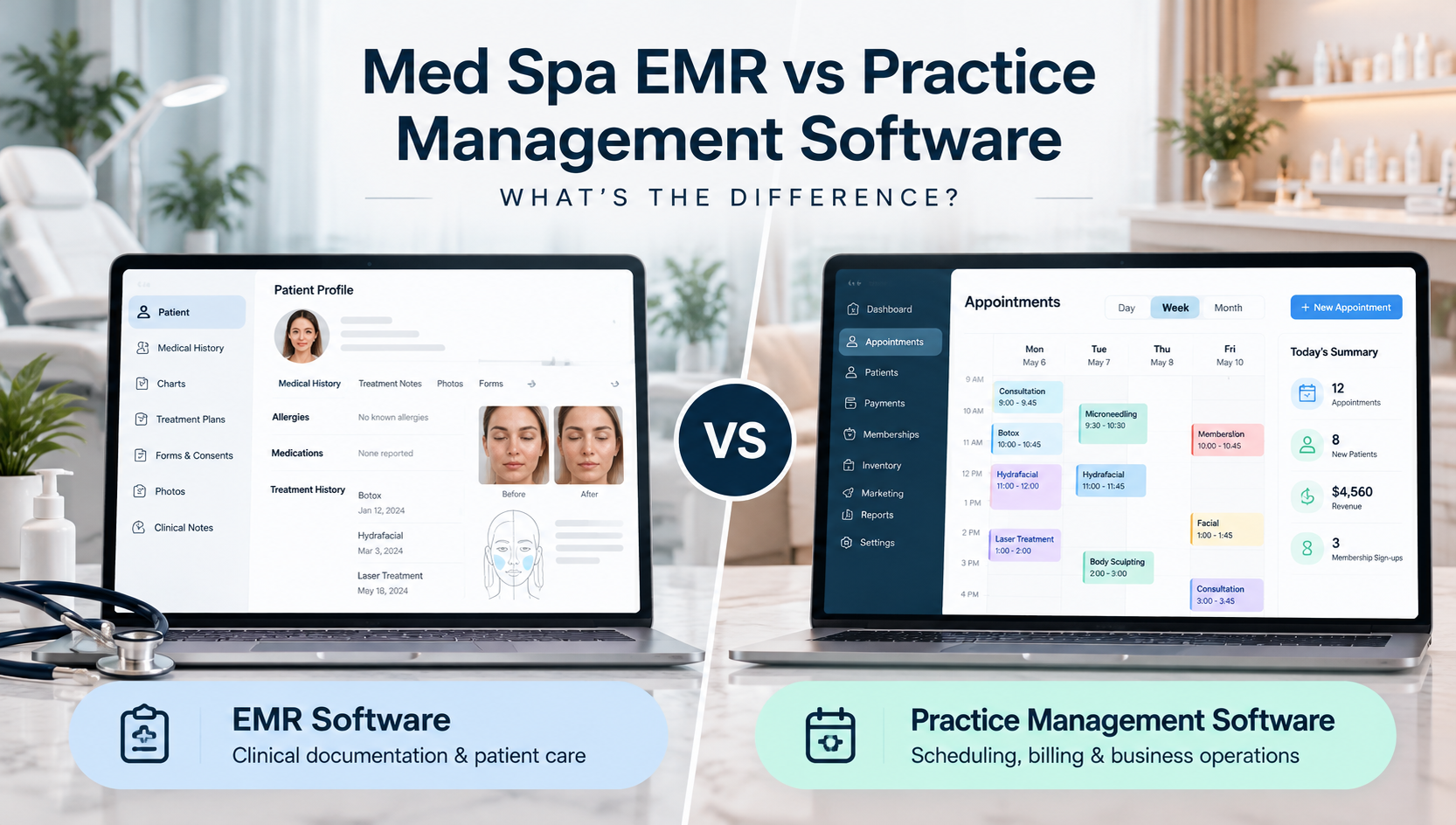
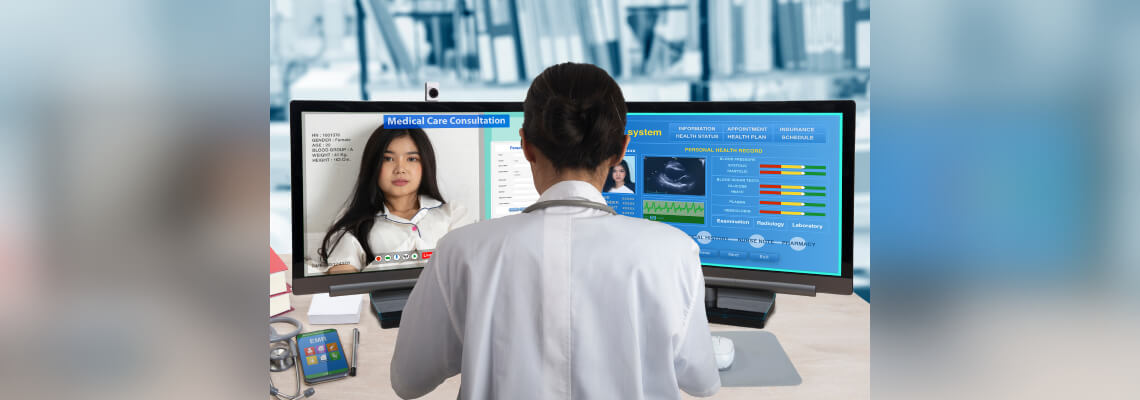
A med spa EMR is an electronic medical record system used to manage patient information and clinical documentation within a medical aesthetic practice.
Depending on the platform, it may include patient histories, treatment notes, consent forms, photographs, medication records, and provider documentation.
Some platforms also connect EMR functionality with appointment scheduling, billing, inventory, and patient communication.
The Office of the National Coordinator for Health Information Technology explains how electronic records can help healthcare professionals organize patient information and support clinical workflows.
Here are 10 features to consider when evaluating med spa EMR software.
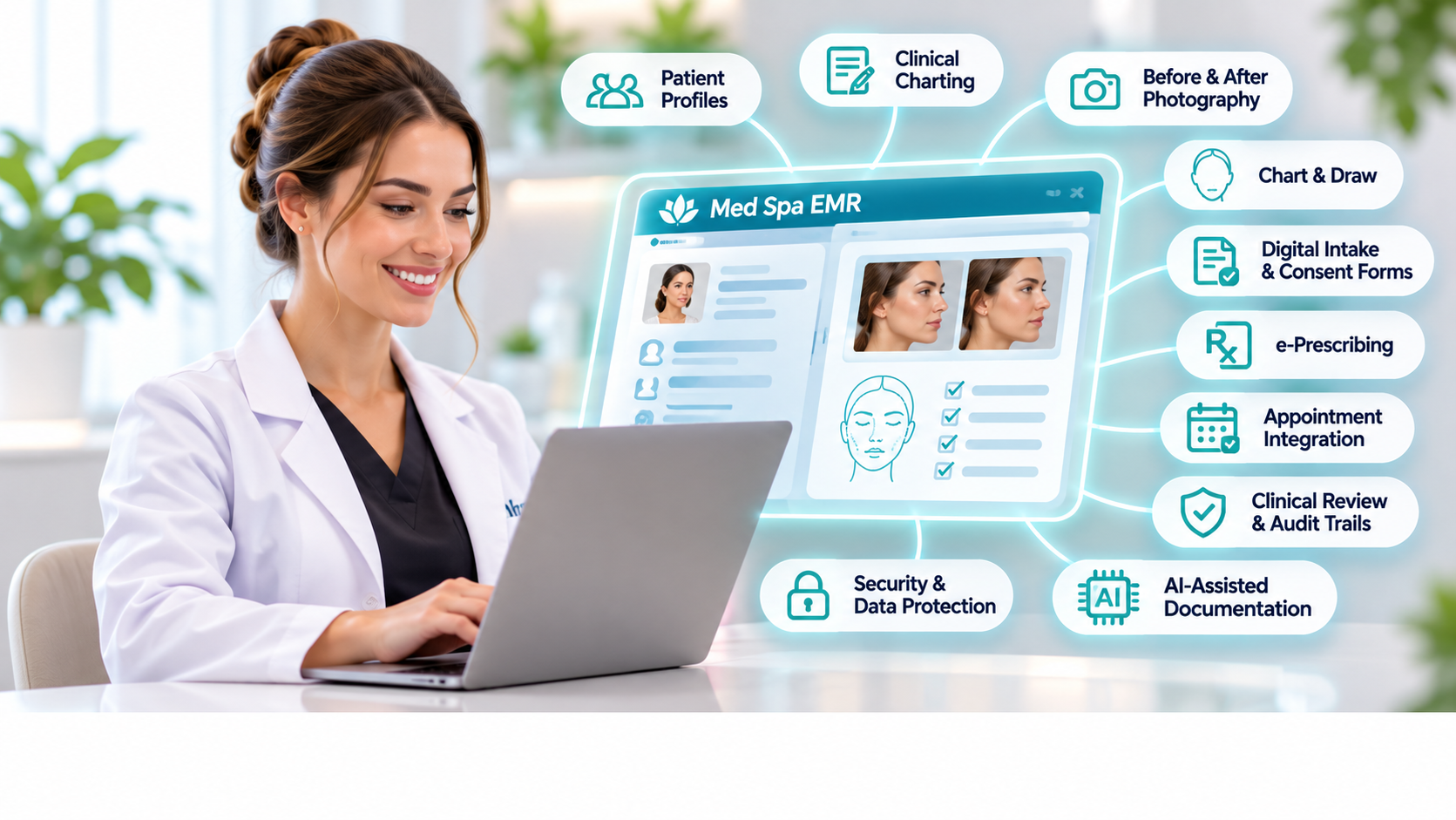
1. Comprehensive Patient Profiles
A connected patient profile should make relevant information available to authorized staff and providers.
Depending on the practice, this may include:
- Contact information
- Medical history
- Allergies
- Current medications
- Previous treatments
- Clinical notes
- Consent documentation
- Appointment history
Organized patient profiles can reduce the need to search across disconnected systems.
Access should be restricted according to staff responsibilities.
2. Customizable Clinical Charting
Different aesthetic treatments require different documentation.
For example, an injectable treatment may require documentation of product information, treatment areas, and administration details.
A laser procedure may require device settings, treatment areas, and clinical observations.
A useful EMR should support customizable templates that reflect the services provided by the practice.
Providers should be able to document the encounter accurately without being restricted to unsuitable generic templates.
3. Before-and-After Photography
Treatment photography is common in medical aesthetics.
A med spa EMR may allow providers to capture, organize, and review photographs associated with specific visits or procedures.
Important considerations include:
- Secure image storage
- Consistent patient identification
- Treatment-date organization
- Image comparison
- Appropriate access permissions
- Photography consent management
Practices should also establish policies for photography, storage, and permitted uses.
Consent for clinical documentation does not automatically authorize promotional use of patient photographs.
4. Chart & Draw Functionality
Visual charting can help providers document treatment locations.
For example, an aesthetic provider may need to record injection sites or mark specific treatment areas.
Chart & Draw functionality allows providers to annotate diagrams or images as part of the clinical record.
This can be particularly useful when visual information provides context that written notes alone may not communicate as clearly.
5. Digital Intake and Consent Forms
Patient intake is a recurring part of medical spa operations.
Digital forms can help practices collect relevant information before or during appointments.
Common forms include:
- Medical history questionnaires
- Treatment-specific intake forms
- Consent forms
- Photography permissions
- Acknowledgments
- Follow-up questionnaires
A connected EMR should associate completed forms with the appropriate patient record.
Practices should also ensure that consent workflows meet applicable legal and clinical requirements.
6. e-Prescribing and Medication Management
Some medical aesthetic and wellness practices prescribe medications as part of their clinical services.
For these practices, e-prescribing may be an important EMR feature.
A connected prescribing workflow can help providers manage medication-related information within the patient record.
DigiMEDSPA offers e-prescribing through its ScriptSure integration.
Practices should confirm prescribing functionality, provider eligibility, controlled-substance capabilities where applicable, and relevant state and federal requirements.
7. Appointment and Treatment Workflow Integration
Clinical documentation becomes easier to manage when it connects with appointment scheduling.
For example, when a patient arrives for a scheduled treatment, the provider should be able to access the relevant patient profile and document the encounter.
A connected workflow may include:
Appointment → Check-In → Patient Chart → Treatment Documentation → Checkout
This reduces the need to move between separate scheduling and clinical applications.
8. Clinical Review and Audit Trails
Medical spas may have clinical oversight requirements involving medical directors or supervising providers.
An EMR should support appropriate review processes, provider permissions, and documentation history.
Useful features may include:
- Role-based access
- Provider signatures
- Chart review
- Documentation timestamps
- Audit trails
- Record change history
The exact requirements depend on the practice's services, professional licensing rules, and jurisdiction.
9. AI-Assisted Clinical Documentation
AI-assisted charting is becoming an additional consideration for medical spa software.
An AI Scribe may help convert recorded or dictated encounter information into draft notes.
However, generated content must be reviewed for accuracy.
Providers should remain responsible for clinical judgment, documentation completeness, and final approval.
Practices should also evaluate privacy safeguards, recording consent, and the handling of sensitive patient information.
10. Security and Patient Data Protection
Clinical records contain sensitive information.
Medical spas should evaluate how an EMR protects patient data.
Important considerations include:
- Access controls
- Authentication
- Audit logging
- Data encryption
- Backup and recovery
- Vendor agreements
- Data export options
- Staff access management
For practices subject to HIPAA, software is only one component of compliance.
The HHS HIPAA Security Rule outlines requirements for protecting electronic protected health information.
How to Choose the Right Med Spa EMR
Before selecting an EMR, identify the clinical workflows your practice needs to support.
Consider the treatments offered, number of providers, documentation requirements, communication needs, and plans for expansion.
Request demonstrations using realistic scenarios.
For example, ask the vendor to demonstrate how a patient moves from appointment booking to intake, treatment documentation, provider sign-off, and checkout.
Also evaluate training, implementation support, data migration, pricing, and ongoing service.
The right EMR should support your existing clinical responsibilities while making routine workflows easier to manage.
How DigiMEDSPA Supports Medical Aesthetic Practices
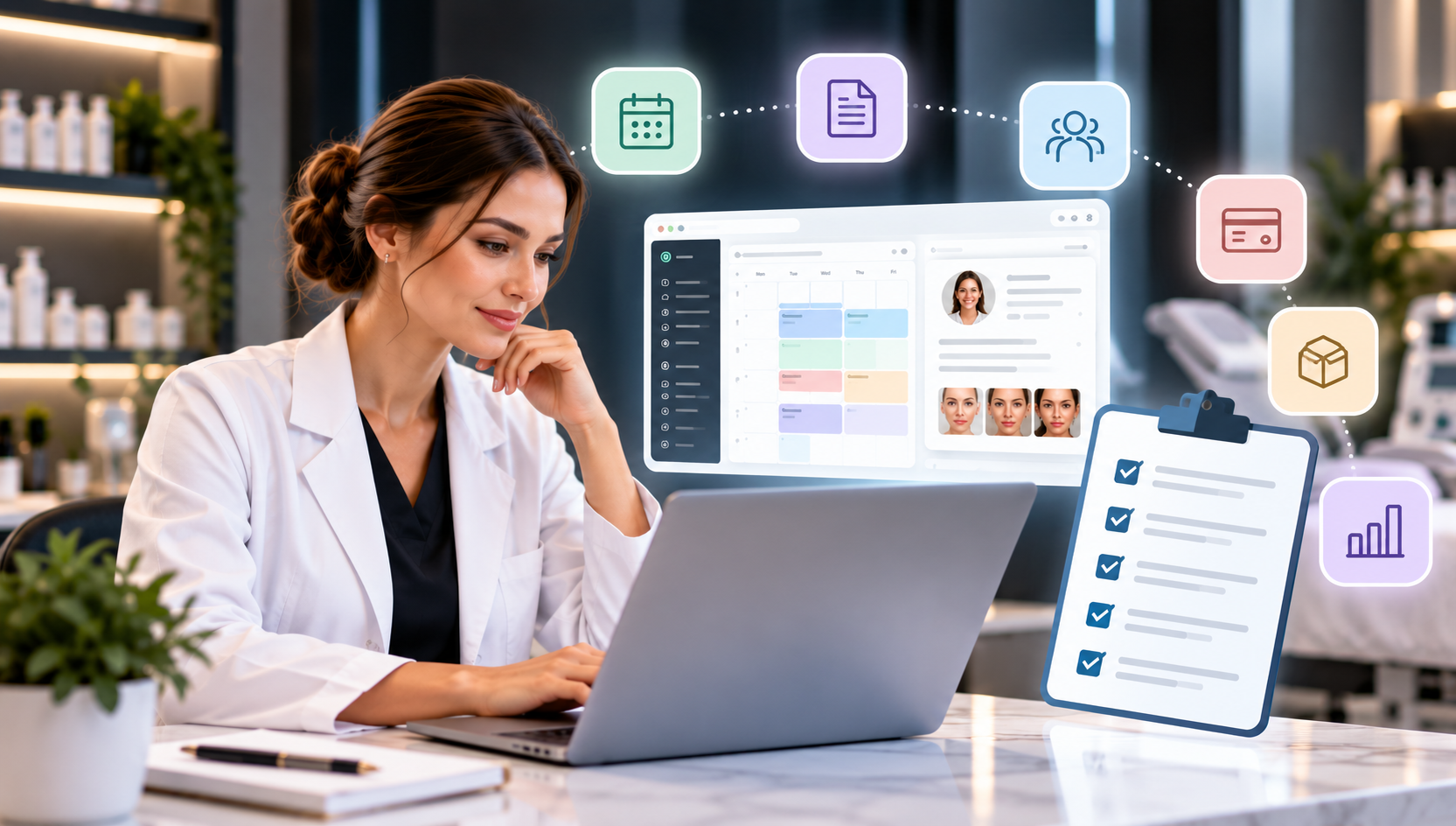
DigiMEDSPA provides an integrated EMR and practice-management platform designed for medical spas and wellness practices.
Its clinical capabilities include patient profiles, treatment documentation, digital questionnaires, consent forms, Chart & Draw, photographs, prescribing integration, and clinical review workflows.
DigiMEDSPA also connects clinical documentation with scheduling, billing, payments, inventory, and Unified Communications.
Its AI Scribe & Charting Assistant is designed to support documentation workflows, with availability and capabilities dependent on configuration and rollout.
This connected approach helps practices manage clinical and administrative activities within one broader platform.
Frequently Asked Questions
What is the difference between a med spa EMR and general EMR software?
A med spa EMR is designed to support medical aesthetic workflows, including treatment-specific charting, photography, consent forms, and procedure documentation.
Do medical spas need electronic medical records?
Medical spas must maintain appropriate clinical records under applicable laws and professional requirements. Whether electronic records are specifically required depends on the jurisdiction and practice circumstances.
Can a med spa EMR store treatment photographs?
Yes. Many med spa EMR platforms support treatment photography and image management.
Does a med spa EMR include scheduling?
Some platforms combine EMR and scheduling, while others require separate scheduling software.
Can AI help with med spa charting?
Yes. AI-assisted documentation tools can help prepare draft notes, but qualified providers must verify the final clinical record.
Explore DigiMEDSPA EMR Software
Your EMR should support the clinical workflows that matter to your medical aesthetic practice.
DigiMEDSPA connects patient records, clinical charting, treatment documentation, scheduling, and administrative operations within one platform.
Explore DigiMEDSPA Med Spa EMR →
One Platform. Every Solution.