What Is Med Spa Management Software?
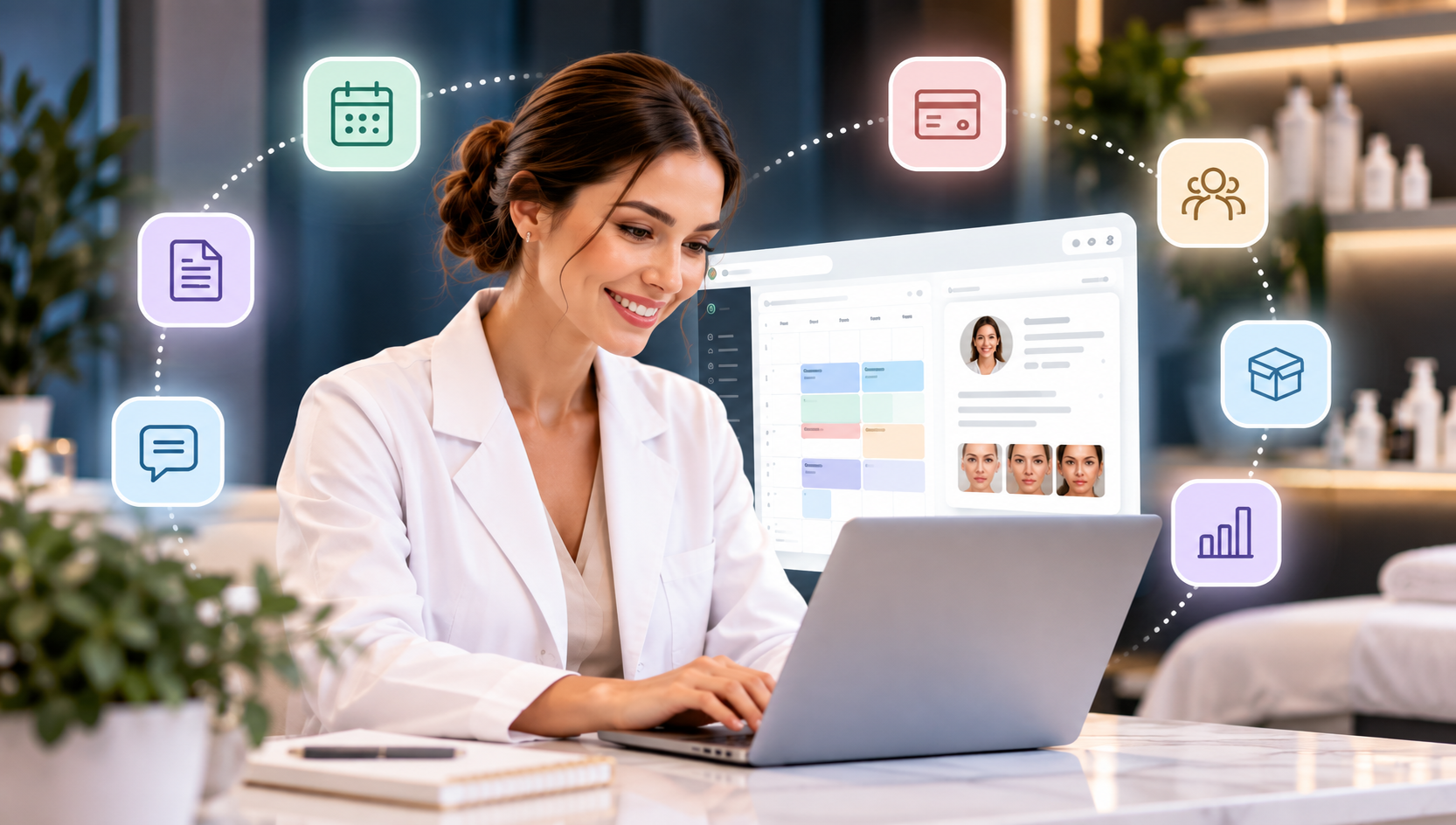
Running a med spa involves much more than managing appointments. Practices may need to coordinate scheduling, patient information, clinical documentation, treatment plans, communications, payments, memberships, inventory, follow-ups, and day-to-day administrative tasks.
When each function operates through a separate system, staff can spend significant time switching between applications and keeping information organized.
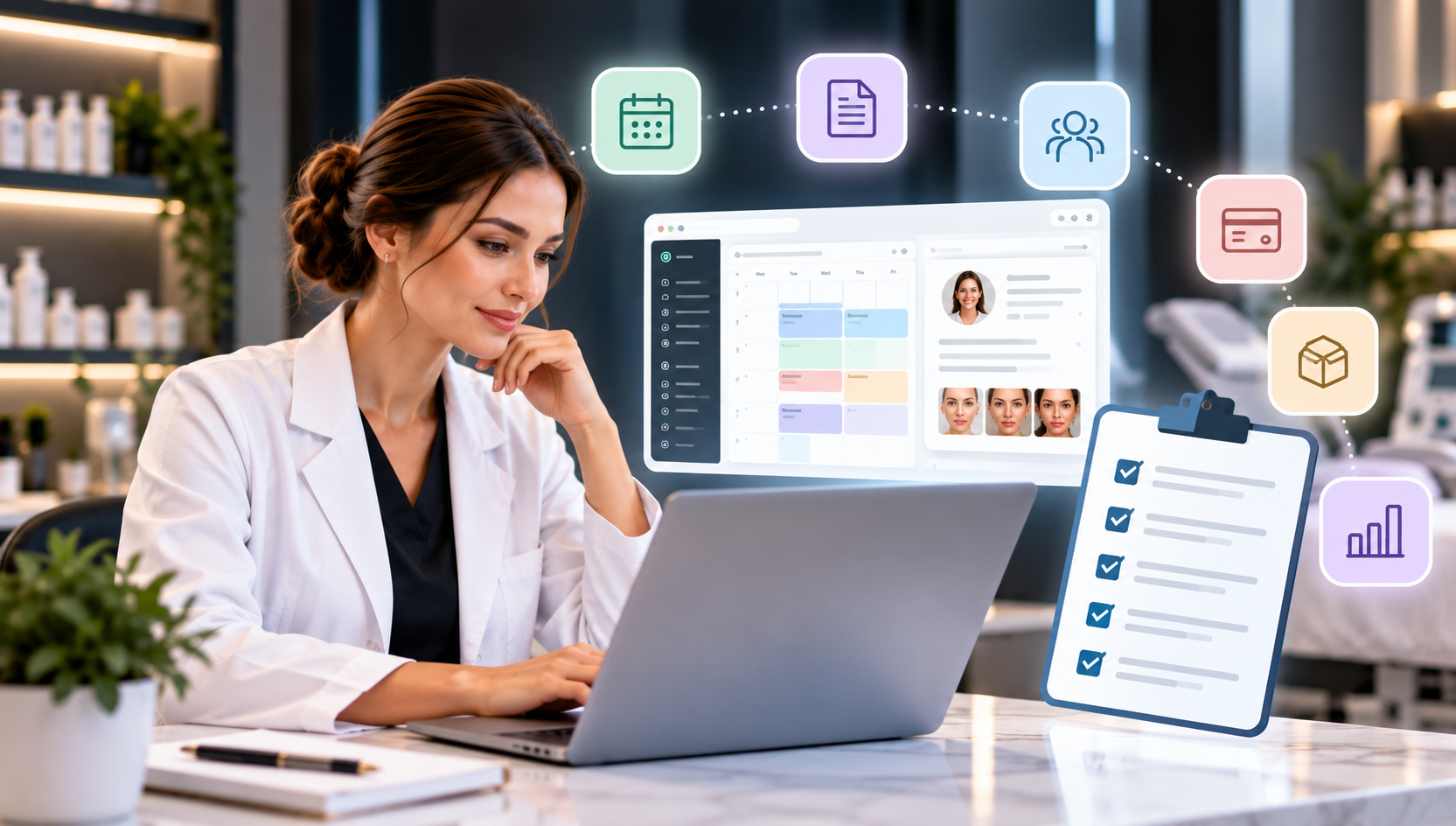
Med spa management software is designed to bring many of these workflows together.
Rather than relying on separate tools for every part of the practice, a management platform can provide a centralized environment for managing both administrative and clinical operations.
For growing aesthetic and wellness practices, the goal is straightforward: make it easier for teams to manage the patient journey from the initial appointment request through treatment, checkout, and ongoing engagement.
What Does Med Spa Management Software Do?
Med spa management software helps practices organize the workflows involved in running an aesthetic or wellness business.
Depending on the platform, these capabilities may include:
- Appointment scheduling and online booking
- Electronic medical records (EMR)
- Patient profiles and medical histories
- Digital intake forms and consents
- Clinical documentation and charting
- Treatment plans
- Before-and-after photography
- Phone and SMS communication
- Patient reminders and follow-ups
- Billing and payment processing
- Membership management
- Product and inventory management
- Reporting and analytics
- Multi-location management
- Telehealth
- E-prescribing
- AI-assisted workflows
Not every platform includes all of these capabilities. That is why practices should evaluate software based on both individual features and how those features work together.
Why Do Med Spas Need Specialized Management Software?
A medical spa has operational requirements that can differ from those of a traditional salon, spa, or general retail business.
Med spas often combine clinical workflows with customer-service and business-management workflows.
For example, a single patient visit may involve:
Appointment → Intake → Check-In → Consultation → Documentation → Treatment → Billing → Checkout → Follow-Up
Each stage generates information that may be relevant to the next.
A generic appointment system may handle the first step well but provide limited support for clinical documentation, treatment plans, patient photographs, consents, or other med spa-specific requirements.
Purpose-built med spa software can help connect these activities within a more consistent workflow.
Key Features of Med Spa Management Software
1. Appointment Scheduling and Online Booking
Scheduling is one of the most frequently used parts of a med spa's technology stack.
A scheduling system may help staff manage:
- Provider availability
- Appointment types
- Treatment durations
- New and existing patients
- Rescheduling
- Cancellations
- Appointment reminders
- Online booking
- Multiple providers
- Multiple locations
Online booking can also give patients another way to request or schedule appointments without relying exclusively on phone calls.
The important consideration is whether scheduling operates independently or connects with the rest of the patient's record.
2. Electronic Medical Records
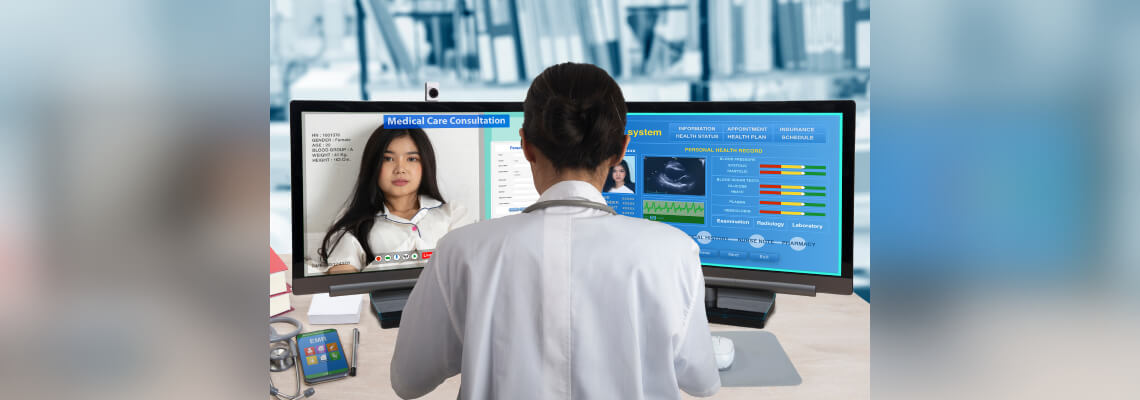
For practices providing medical aesthetic services, the EMR can become a central part of the workflow.
A med spa EMR may help organize information such as:
- Patient demographics
- Medical histories
- Allergies
- Medications
- Treatment history
- Clinical notes
- Treatment plans
- Consent documentation
- Patient photographs
- Procedure documentation
The exact documentation requirements depend on the services provided and applicable laws, regulations, and practice policies.
The advantage of an integrated system is that authorized staff can access relevant information without maintaining disconnected clinical and administrative records.
3. Digital Forms, Questionnaires and Consents
New-patient intake can involve significant paperwork.
Digital forms can allow practices to collect appropriate information before or during the appointment.
These may include:
- Patient intake questionnaires
- Medical history forms
- Treatment-specific questionnaires
- Consent forms
- Practice policies
- Surveys
When these documents connect directly with the patient profile, staff can spend less time manually transferring information between systems.
4. Clinical Charting and Treatment Documentation
Aesthetic procedures often require specialized documentation.
Depending on the software and procedure, clinical tools may support treatment notes, diagrams, photographs, treatment areas, product information, and other relevant details.
For example, visual charting tools can help providers document treatment areas directly on anatomical diagrams.
Before-and-after photography can also provide an organized visual record when appropriately obtained, stored, and managed.
5. Patient Communication
Communication happens throughout the patient journey.
A patient might:
- Call the practice with a question.
- Receive an appointment confirmation.
- Receive an SMS reminder.
- Contact the practice to reschedule.
- Receive post-visit instructions.
- Receive a follow-up message.
When phone, SMS, and other communication tools are disconnected from practice-management systems, staff may have to reconstruct this history manually.
Connected communication tools can help keep relevant interactions associated with the broader patient workflow.
6. Billing and Payments
Once treatment is completed, practices need an efficient way to move into checkout.
Med spa management software may support:
- Current-sale management
- Multiple payment methods
- Discounts and promotions
- Membership benefits
- Product sales
- Patient balances
- Transaction records
- Receipts
- Revenue reporting
An integrated workflow can make it easier to move from treatment documentation to checkout without recreating information in another application.
7. Membership Management
Memberships have become an important business model for many aesthetic practices.
Management software may help practices organize:
- Membership plans
- Member benefits
- Recurring payments
- Discounts
- Included services
- Patient membership status
- Membership activity
Connecting membership information with patient profiles and checkout can also help staff identify applicable benefits during a visit.
8. Inventory Management
Med spas may need to monitor both retail products and supplies associated with treatments.
Inventory-management capabilities can help practices track:
- Products
- Quantities
- Usage
- Stock levels
- Product sales
- Reordering needs
For clinical products, practices should also consider whether the software supports the documentation and traceability requirements relevant to their operations.
9. Reporting and Analytics
Management software can also provide practice owners with greater visibility into operations.
Depending on the platform, reporting may cover areas such as:
- Revenue
- Appointments
- Transactions
- Provider activity
- Patient activity
- Memberships
- Inventory
- Communication
- Lead activity
The most useful dashboards focus on information that helps practice owners understand what is happening and where attention may be required.
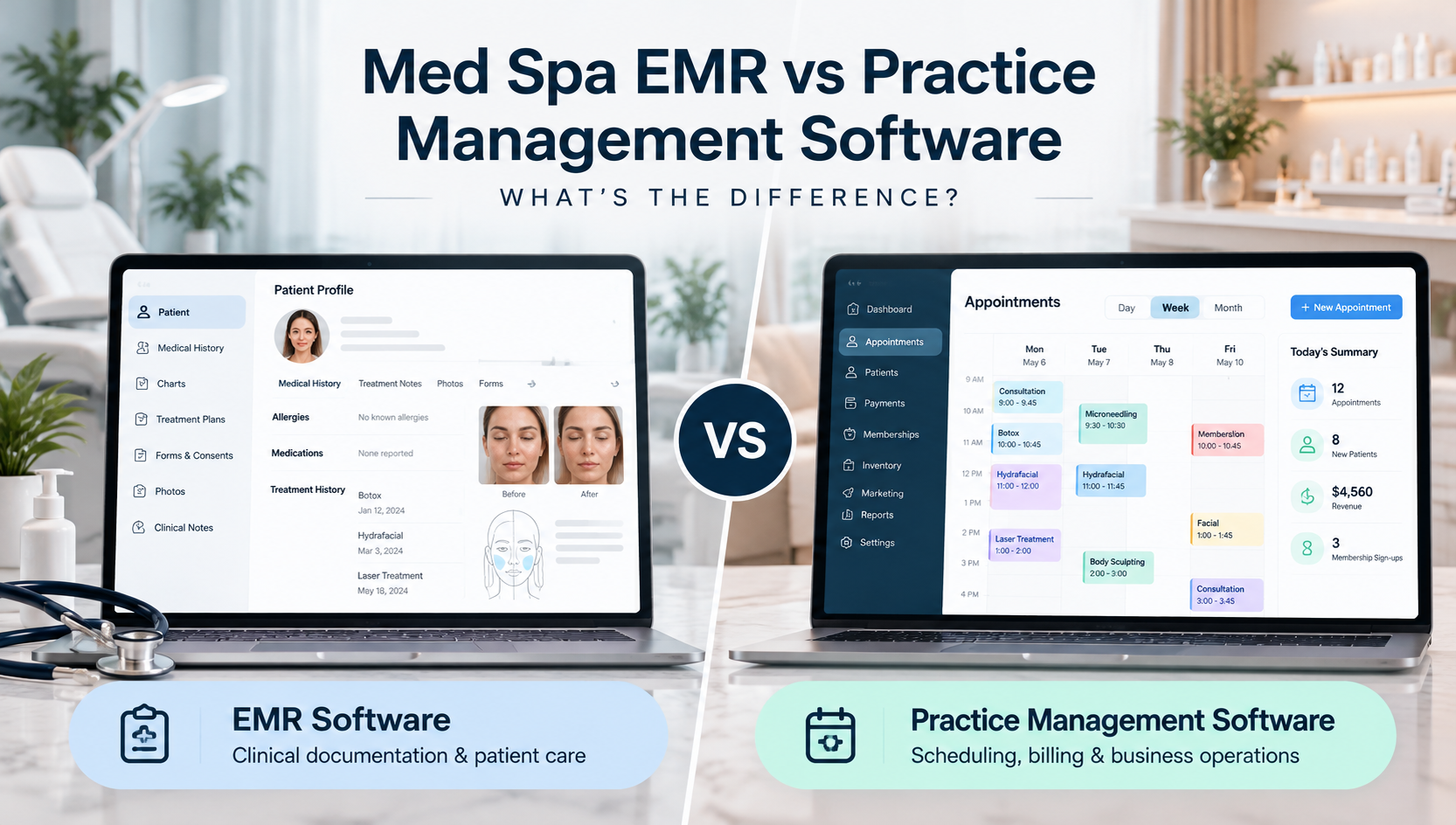
What Is the Difference Between Med Spa Management Software and an EMR?
The terms are sometimes used interchangeably, but they describe different scopes.
EMR software primarily focuses on managing electronic patient records and clinical documentation.
Med spa management software generally has a broader operational scope.
For example:
| EMR | Med Spa Management Software |
|---|---|
| Patient records | Patient records |
| Medical history | Medical history |
| Clinical notes | Clinical notes |
| Treatment documentation | Treatment documentation |
| Consents | Consents |
| — | Scheduling |
| — | Online booking |
| — | Communications |
| — | Payments |
| — | Memberships |
| — | Inventory |
| — | Business reporting |
An all-in-one platform may include the EMR as part of a larger practice-management ecosystem.
This distinction is important when comparing software. A practice looking only for clinical documentation may have different requirements from one trying to consolidate several operational systems.
All-in-One Software vs. Multiple Separate Systems
Some practices build their technology stack using separate applications for scheduling, EMR, communications, payments, marketing, and other functions.
That approach can provide flexibility, but it can also introduce fragmentation.
For example:
Separate systems
Scheduling → EMR → Phone/SMS → Payments → Inventory → Reporting
Each system may maintain its own data and workflows.
With a more integrated platform:
Booking → Patient Profile → EMR → Treatment → Checkout → Follow-Up
The information can remain connected as the patient progresses through the practice.
The best approach ultimately depends on the practice's requirements, existing technology, integrations, budget, and workflows.
How AI Is Entering Med Spa Management Software
Artificial intelligence is increasingly being incorporated into practice-management technology.
Potential applications include:
- Answering common patient inquiries
- Supporting appointment workflows
- Managing certain SMS conversations
- Capturing new inquiries
- Assisting with patient intake
- Preparing documentation drafts
- Supporting administrative workflows
AI should not simply be evaluated as another feature.
Practices should consider where AI fits into the existing workflow, what information it can access, what actions it is permitted to take, and where staff or provider review is required.
This becomes especially important when AI is used around patient information or clinical documentation.
What Should You Look for in Med Spa Management Software?
Before selecting a platform, consider how your practice operates today and where inefficiencies exist.
Useful questions include:
Does it support both administrative and clinical workflows?
A med spa often needs more than scheduling or a basic CRM.
Can the major features communicate with one another?
Having twenty features is less useful if staff still have to manually move information between them.
Can it support your clinical documentation requirements?
Evaluate patient records, charting, photographs, consents, treatment plans, and other documentation relevant to your services.
Does it support patient communication?
Consider phone, SMS, reminders, appointment notifications, and follow-up workflows.
Can it grow with your practice?
Consider additional providers, users, services, and locations.
What security controls are available?
Ask about access controls, data protection, auditability, and other security capabilities relevant to your organization.
What happens during implementation?
Data migration, configuration, staff training, and support can be just as important as the feature list.
How DigiMEDSPA Connects the Med Spa Workflow
DigiMEDSPA is designed as an integrated platform for aesthetic and wellness practices.
Instead of treating each part of practice management as a separate workflow, DigiMEDSPA connects key areas of the patient and operational journey.
Depending on the practice's configuration, the platform includes capabilities across:
- Scheduling & Online Booking
Manage appointments, provider availability, appointment types, and patient booking. - EMR & Patient Management
Maintain patient information, medical histories, clinical documentation, notes, photographs, treatment plans, and related records. - Communications
Connect phone, SMS, and other patient communication workflows with practice operations. - Billing & Payments
Move from treatment into billing and checkout within the broader patient workflow. - Memberships & Inventory
Manage membership programs, products, and inventory. - AI Solutions
Extend workflows with tools such as AI Front Desk, AI SMS Agent, and AI Scribe & Charting Assistant.
The objective is to give practices a connected environment rather than requiring teams to manage the patient journey across numerous disconnected applications.
Frequently Asked Questions
What is med spa management software?
Med spa management software is technology designed to help aesthetic and wellness practices manage administrative and clinical workflows such as scheduling, patient records, documentation, communication, payments, memberships, inventory, and reporting.
Is med spa software the same as EMR software?
Not necessarily. An EMR primarily manages patient records and clinical documentation. Med spa management software can include an EMR while also supporting scheduling, communications, payments, inventory, memberships, reporting, and other operational functions.
Can med spa management software include online booking?
Yes. Many platforms provide scheduling and online-booking capabilities, although specific functionality varies between vendors.
Can med spa software manage multiple locations?
Some platforms support multiple locations, providers, schedules, and operational reporting. Practices planning to expand should evaluate multi-location functionality before choosing a platform.
Does med spa management software include AI?
Increasingly, some platforms offer AI capabilities for administrative communication, scheduling support, patient engagement, documentation assistance, and other workflows. The available functionality varies significantly by platform.
What should I consider when choosing med spa software?
Consider your clinical requirements, scheduling needs, communication workflows, payment processes, integrations, security requirements, scalability, implementation process, training, support, and how well the platform connects the workflows your team uses every day.
Bring Your Med Spa Workflow Together
Managing a med spa does not have to mean managing a collection of disconnected systems.
A connected practice-management platform can bring scheduling, patient information, clinical documentation, communication, treatment workflows, billing, and ongoing engagement into a more unified environment.
DigiMEDSPA — One Platform. Every Solution.
Book a Personalized Demo → Contact Us