

How to Improve Med Spa Patient Retention and Encourage Repeat Visits
Attracting new patients is important for medical spa growth, but maintaining relationships with existing patients is equally valuable.
A positive treatment experience may encourage a patient to return, but long-term engagement also depends on communication, convenience, follow-up, and consistent service.
For medical spas, patient retention is not simply about encouraging repeat purchases. It involves creating a reliable experience that supports ongoing patient relationships.
Here are practical ways to improve med spa patient retention.
1. Create a Consistent Patient Experience
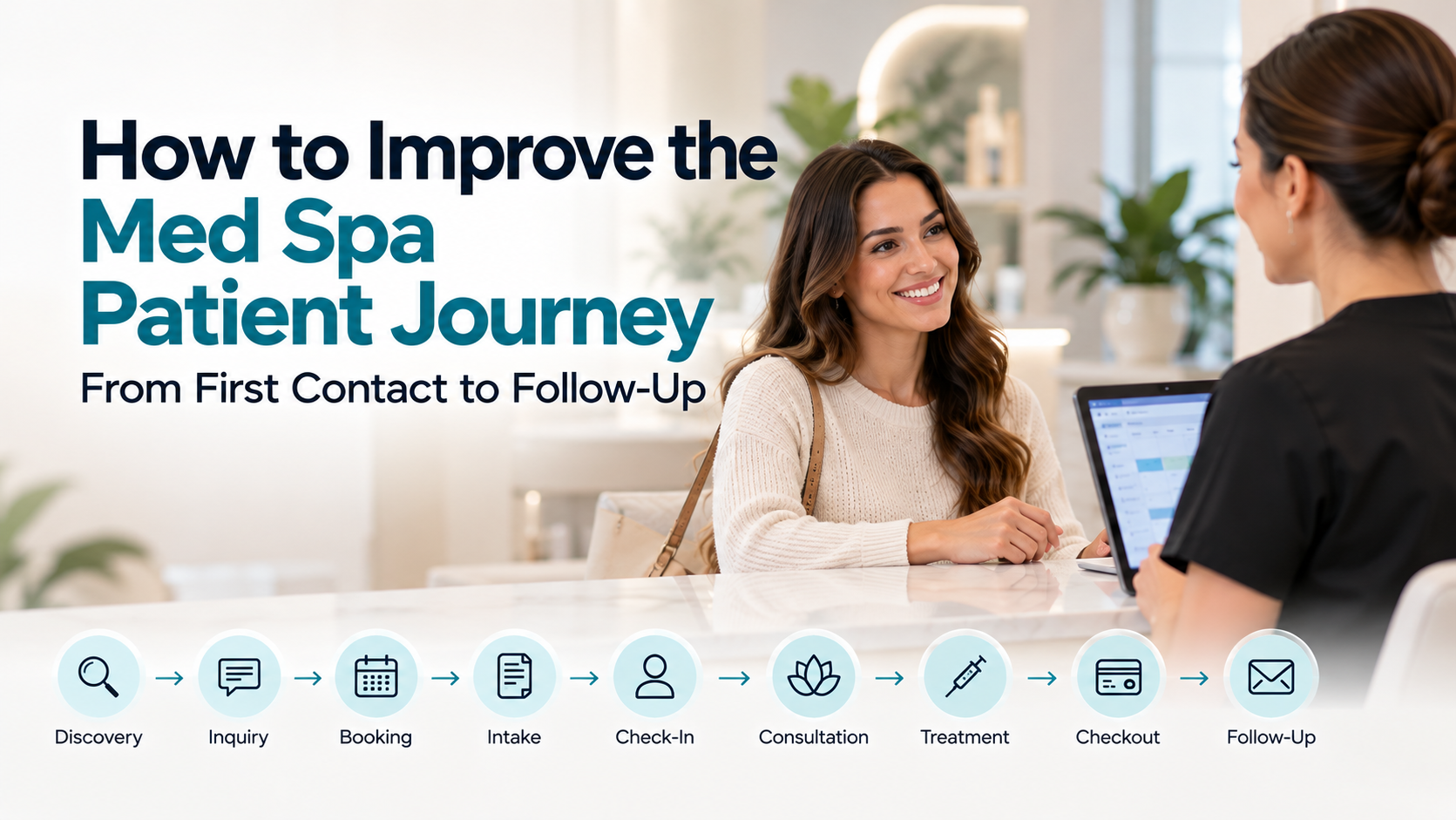
Patients interact with a medical spa at several stages.
These include the initial inquiry, appointment booking, intake, consultation, treatment, checkout, and follow-up.
When these interactions feel disconnected, patients may experience unnecessary inconvenience.
For example, a patient who has already completed intake forms should not routinely need to provide the same information again.
A connected patient management system can help staff access relevant information and provide a more consistent experience.
Learn more about how connected technology supports the med spa patient journey.
2. Personalize Communication
Personalization begins with understanding the patient's relationship with the practice.
Relevant information may include previous appointments, communication preferences, treatment history, and future care plans.
For example, patients may appreciate receiving information related to a recommended follow-up rather than unrelated promotional messages.
Personalization should remain appropriate to the clinical relationship and the patient's communication preferences.
The objective is to make communication useful, not overwhelming.
3. Improve Post-Treatment Follow-Up
Patient engagement should not end when checkout is complete.
Depending on the treatment, follow-up communication may include:
- Aftercare instructions
- Follow-up appointment information
- Appropriate check-ins
- Patient satisfaction surveys
- Recommended next steps
Clinical follow-up should always reflect provider instructions and the patient's individual circumstances.
The Office of the National Coordinator for Health Information Technology describes how electronic health information can support patient participation and follow-up communication.
4. Make Rebooking Convenient
Patients may intend to return but delay booking because the process is inconvenient.
Offering clear booking options can help patients arrange future visits.
Practices should consider providing online booking, front-desk scheduling, and convenient ways to request appointment changes.
Appointment reminders and follow-up communication can also help patients stay informed about planned visits.
5. Offer Memberships That Provide Clear Value
Memberships can help practices organize ongoing service relationships.
Depending on the program, membership benefits may include treatment credits, discounts, product benefits, or access to selected services.
However, memberships should be easy to understand.
Patients should know:
- What is included
- How billing works
- Whether benefits expire
- How cancellation works
- Which services are excluded
Membership terms should be transparent and consistent with applicable consumer protection requirements.
DigiMEDSPA supports membership management alongside patient profiles, payments, and practice operations.
6. Use Patient Feedback to Identify Improvements
Patient feedback can reveal opportunities that may not be obvious from internal reports.
A practice may discover that patients appreciate their providers but find appointment scheduling confusing.
Others may report difficulty reaching the front desk or understanding post-treatment instructions.
Feedback can be collected through appropriate surveys, direct conversations, and review monitoring.
The goal is to identify recurring issues and improve the experience.
7. Keep Communication Connected
When communication is spread across separate phone systems, messaging tools, and patient records, staff may struggle to maintain context.
DigiMEDSPA's Unified Communications tools help connect phone and SMS interactions with the broader practice environment.
Connected communication can make it easier for staff to respond to inquiries and manage patient relationships.
8. Measure Patient Retention
Retention should be measured consistently.
Useful indicators include:
- Repeat appointment rate
- Returning patient percentage
- Time between visits
- Membership renewal rate
- Patient satisfaction
- Follow-up appointment completion
A simple retention measure is:
Returning Patient Rate = Returning Patients ÷ Total Patients Seen × 100
Define the reporting period and distinguish existing patients from first-time patients.
Also consider treatment frequency. A patient who returns annually for an appropriate service should not automatically be considered less engaged than someone receiving monthly treatments.
How DigiMEDSPA Supports Patient Retention
DigiMEDSPA connects patient records, scheduling, communication, memberships, payments, and follow-up workflows.
This connected approach helps practices maintain patient information and support consistent interactions throughout the relationship.
Improving retention does not require sending more messages or promoting more services.
It requires making each interaction relevant, convenient, and consistent.
Explore DigiMEDSPA Patient Management →
Build stronger patient relationships with connected practice technology.