
How to Manage Med Spa Inventory and Reduce Product Waste
Effective inventory management is an important part of running a profitable and organized medical spa.
From injectables and skincare products to treatment supplies and retail merchandise, medical aesthetic practices manage a wide range of products that must be purchased, stored, tracked, and replenished.
Without an organized inventory management process, practices may experience product shortages, expired supplies, inaccurate stock counts, unnecessary purchases, and unexpected operational expenses.
As a medical spa grows, managing inventory through spreadsheets or manual records can become increasingly difficult.
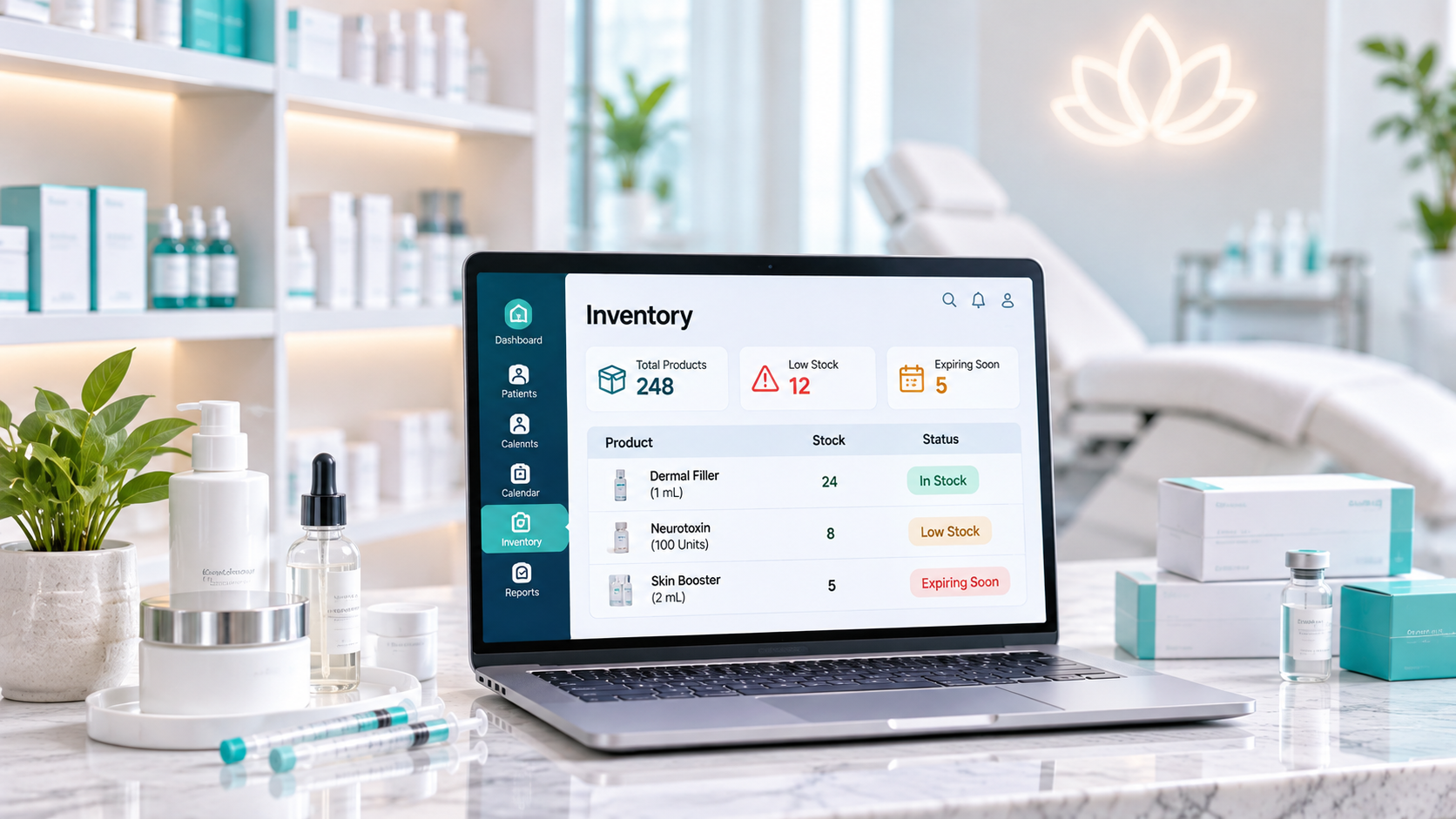
Integrated med spa inventory management software can help practices maintain better visibility into product availability, treatment usage, purchasing requirements, and retail sales.
Here are practical ways to improve inventory management and reduce unnecessary product waste at your medical spa.
What Is Med Spa Inventory Management?
Med spa inventory management refers to the process of monitoring, organizing, and controlling the products and supplies used within a medical aesthetic practice.
Depending on the services offered, inventory may include:
- Injectable products
- Professional skincare products
- Retail skincare merchandise
- Medical supplies
- Treatment consumables
- Wellness treatment supplies
- Personal protective equipment
- Disposable procedure materials
Effective inventory management involves more than knowing how many products are available.
It also requires understanding how products are used, when they need to be replenished, how they are stored, and how inventory costs affect practice profitability.
Why Inventory Management Matters for Medical Spas
Medical aesthetic practices often work with products that have specific storage requirements, expiration dates, and significant purchasing costs.
Poor inventory management can affect both financial performance and daily operations.
Common challenges include:
- Products expiring before use
- Excess inventory occupying storage space
- Unexpected product shortages
- Inaccurate inventory records
- Untracked treatment-related product usage
- Differences between recorded and actual stock levels
- Unnecessary emergency purchases
- Difficulty monitoring product costs
An organized inventory system can help practices identify these issues earlier and make more informed purchasing decisions.
1. Organize Inventory Into Clear Product Categories
The first step toward better inventory management is creating a consistent product organization system.
Medical spas should categorize inventory according to its purpose and usage.
| Inventory Category | Examples |
|---|---|
| Clinical Products | Injectable products and provider-administered treatment products |
| Treatment Consumables | Syringes, gloves, gauze, and disposable supplies |
| Professional Skincare | Products used during in-office treatments |
| Retail Products | Cleansers, moisturizers, serums, and sunscreens |
| Wellness Supplies | Supplies associated with wellness services |
| General Supplies | Cleaning products and administrative materials |
Clear product categories can make inventory easier to monitor, count, and replenish.
Practices should also maintain consistent product names, measurement units, and internal identifiers to avoid duplicate or inaccurate records.
2. Monitor Stock Levels Regularly
Maintaining appropriate stock levels helps medical spas prepare for upcoming appointments without purchasing unnecessary quantities.
When stock levels are not monitored consistently, practices may discover shortages only when a treatment is about to begin.
An effective inventory management process should help staff understand:
- Current available quantities
- Products approaching low-stock levels
- Recently received inventory
- Frequently used products
- Slow-moving inventory
- Products requiring replenishment
For example, a practice offering several injectable appointments each week may need to monitor those products more frequently than general office supplies.
Inventory reviews should reflect actual product demand, treatment schedules, supplier lead times, and storage limitations.
3. Track Expiration Dates and Product Storage Requirements
Expiration management is particularly important for medical aesthetic practices.
Certain products may have limited shelf lives or specific temperature and storage requirements.
Practices should establish procedures for monitoring:
- Product expiration dates
- Manufacturer storage instructions
- Lot and batch information
- Opened-product usage limitations
- Damaged or compromised products
- Products requiring disposal
A first-expired, first-out (FEFO) inventory approach can help staff prioritize products with the earliest expiration dates, provided those products remain appropriate and safe for use.
The U.S. Food and Drug Administration provides information about medication expiration dates and their relationship to product quality.
Medical spas should always follow applicable manufacturer instructions, professional standards, and regulatory requirements when storing, handling, and disposing of clinical products.
Inventory software can support recordkeeping, but it does not replace appropriate clinical product management procedures.
4. Connect Inventory With Clinical Treatment Workflows
One of the challenges of manual inventory management is accurately recording which products are used during patient treatments.
When clinical documentation and inventory records are maintained separately, staff may need to enter the same information into multiple systems.
This can create additional administrative work and increase the possibility of discrepancies.
A connected EMR and inventory management system can help practices associate product usage with treatment workflows.
For example, during an aesthetic procedure, a provider may document the products used as part of the treatment record.
Depending on the software configuration, relevant inventory information can then be updated through the connected workflow.
This approach can help practices maintain better visibility into:
- Products used during treatments
- Treatment-related inventory consumption
- Product quantities remaining
- Clinical product documentation
- Inventory movement
DigiMEDSPA's EMR and practice management software connects clinical documentation with broader operational workflows, including inventory management.
5. Connect Retail Sales With Inventory Management
Many medical spas generate additional revenue through retail skincare and wellness products.
However, retail inventory can become difficult to manage when sales transactions and stock records are maintained separately.
For example, if a patient purchases a skincare product at checkout, the sale should be reflected accurately in the practice's inventory records.
An integrated point-of-sale and inventory management system can help connect:
- Retail product sales
- Available stock quantities
- Product pricing
- Patient purchases
- Sales reporting
- Inventory adjustments
This can reduce the need for staff to manually update inventory after every transaction.
It can also help practices identify which retail products sell consistently and which products may require adjustments to purchasing quantities.
6. Establish Minimum Stock Levels and Reorder Points
Ordering products only when they run out can disrupt treatment schedules and retail sales.
At the same time, purchasing excessive inventory can tie up working capital and increase the risk of product expiration.
Medical spas should establish appropriate minimum stock levels and reorder points based on product demand.
A simple reorder point calculation is:
Reorder Point = Average Daily Product Usage × Supplier Lead Time + Safety Stock
For example, if a practice uses four units of a product per day, its supplier requires five days to deliver, and the practice maintains six additional units as safety stock:
Reorder Point = (4 × 5) + 6 = 26 units
In this example, the practice would consider placing a new order when available inventory reaches approximately 26 units.
Actual reorder levels should account for demand fluctuations, expiration dates, supplier reliability, and product-specific storage requirements.
7. Conduct Regular Physical Inventory Counts
Even with inventory management software, physical inventory counts remain important.
Recorded stock levels may differ from actual quantities because of unrecorded usage, damaged products, incorrect entries, returns, or other inventory adjustments.
Practices should establish a consistent inventory counting schedule.
| Frequency | Recommended Activity |
|---|---|
| Daily | Review critical or frequently used clinical products |
| Weekly | Check high-value products and low-stock items |
| Monthly | Reconcile physical inventory with system records |
| Quarterly | Review purchasing patterns, waste, and slow-moving stock |
The appropriate frequency depends on the size of the practice, product value, treatment volume, and regulatory requirements.
When discrepancies are identified, staff should investigate and document the reason rather than simply adjusting the recorded quantity.
8. Monitor Inventory Costs and Treatment Profitability
Inventory management plays an important role in understanding the financial performance of a medical spa.
A treatment may generate substantial revenue, but product costs and other operating expenses affect its actual profitability.
Practices should evaluate the direct costs associated with delivering treatments.
These may include:
- Clinical product costs
- Disposable treatment supplies
- Provider labor
- Equipment-related expenses
- Payment processing fees
- Other direct treatment expenses
For example, a treatment generating $500 in revenue with $180 in direct costs contributes $320 before other applicable operating expenses.
Tracking product consumption can help practices develop a more accurate understanding of treatment costs.
The U.S. Small Business Administration provides resources for managing business finances and understanding operational expenses.
Connected inventory and financial reporting can support more informed decisions about purchasing, pricing, and service offerings.
9. Reduce Overstocking and Slow-Moving Inventory
Purchasing large quantities may appear cost-effective when suppliers offer discounts.
However, bulk purchasing does not always produce savings.
Products that remain unused for extended periods may expire, become outdated, or occupy valuable storage space.
To reduce overstocking, medical spas should:
- Review historical product usage
- Consider upcoming appointment demand
- Monitor seasonal purchasing patterns
- Identify slow-moving retail products
- Review supplier minimum order requirements
- Avoid unnecessary purchases based solely on discounts
Purchasing decisions should be based on realistic demand rather than anticipated growth alone.
Practices should also avoid encouraging medically unnecessary treatments simply to use excess clinical inventory.
Patient needs and clinical judgment should always guide treatment decisions.
10. Manage Inventory Across Multiple Locations
Inventory management becomes more complex when a medical spa operates across several locations.
Each location may have different treatment volumes, provider schedules, product requirements, and purchasing patterns.
Without organized inventory records, management may struggle to understand which products are available at each clinic.
A multi-location inventory management approach should support visibility into:
- Location-specific stock levels
- Product consumption by location
- Purchasing requirements
- Authorized inventory adjustments
- Product transfers
- Inventory discrepancies
Where product transfers are permitted, practices should maintain appropriate documentation and comply with relevant storage, transportation, and regulatory requirements.
A centralized practice-management environment can help business owners maintain greater oversight while allowing individual locations to manage their operational needs.
11. Measure Inventory Management Performance
Inventory management should be evaluated using consistent operational metrics.
Useful indicators include:
| Metric | What It Measures |
|---|---|
| Inventory Accuracy | How closely recorded quantities match physical stock |
| Inventory Turnover | How frequently inventory is sold or consumed |
| Product Waste | Value of expired, damaged, or unusable products |
| Stockout Frequency | How often required products become unavailable |
| Inventory Value | Total recorded cost of available inventory |
| Product Usage | Quantity of products consumed during treatments |
| Retail Sell-Through | Percentage of available retail stock sold |
For example, inventory accuracy can be measured using:
Inventory Accuracy = Number of Correctly Counted Product Records ÷ Total Product Records Counted × 100
Tracking these metrics over time can help practices identify recurring discrepancies, improve purchasing decisions, and evaluate inventory management procedures.
How to Choose Med Spa Inventory Management Software
Not every inventory management system is designed for medical aesthetic practices.
General retail inventory software may help track product sales but may not connect with clinical documentation, treatment workflows, or patient records.
When evaluating med spa inventory management software, consider whether the platform supports:
- Clinical and retail inventory
- Product quantity tracking
- Inventory adjustments
- Treatment-related product usage
- Purchasing and replenishment workflows
- Point-of-sale integration
- Inventory reporting
- Staff access permissions
- Multi-location management
- Integration with EMR and practice management
Practices should request a demonstration using realistic scenarios.
For example, ask the software provider to demonstrate how a product moves from inventory receiving through treatment usage or retail checkout and how the transaction affects available stock.
The goal is to choose a system that supports the complete inventory lifecycle rather than simply maintaining a list of products.
How DigiMEDSPA Supports Connected Inventory Management
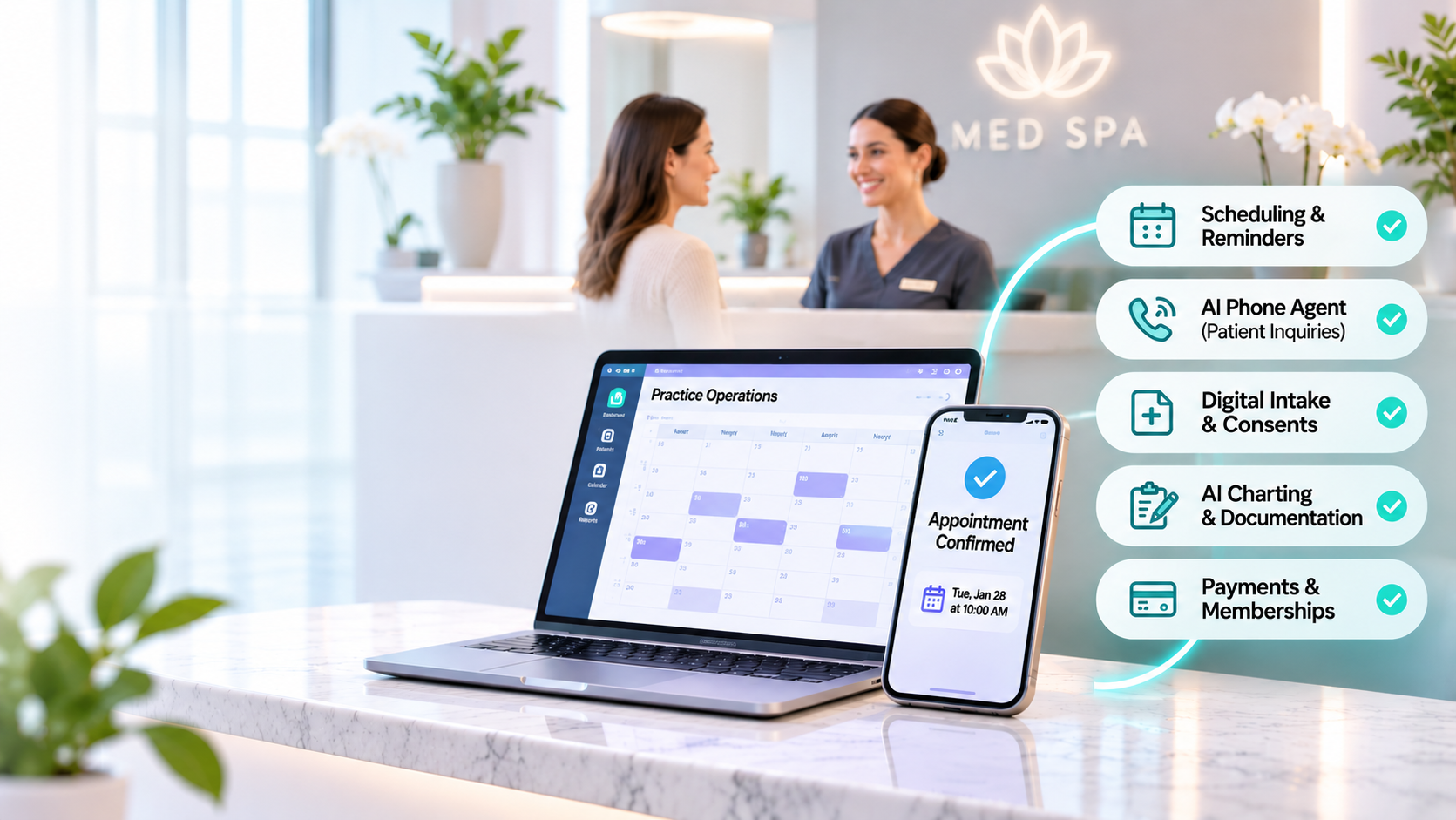
DigiMEDSPA provides an integrated med spa practice management platform designed to connect clinical, administrative, and financial operations.
Its inventory management capabilities work alongside other essential practice workflows, including:
- Electronic medical records
- Patient profiles
- Treatment documentation
- Appointment scheduling
- Billing and payments
- Point-of-sale transactions
- Memberships and packages
- Multi-location management
- Operational reporting
By connecting inventory management with clinical and financial workflows, DigiMEDSPA helps practices maintain better visibility into product usage and daily operations.
Instead of relying entirely on separate spreadsheets, retail systems, and clinical records, medical spas can manage essential information within a connected practice-management environment.
Specific inventory automation and reporting capabilities may depend on the selected configuration.
Frequently Asked Questions
What is med spa inventory management software?
Med spa inventory management software helps medical aesthetic practices organize products, monitor stock quantities, track usage, manage inventory adjustments, and support purchasing decisions.
How can medical spas reduce inventory waste?
Medical spas can reduce unnecessary waste by monitoring expiration dates, maintaining appropriate stock levels, conducting regular inventory counts, and purchasing products based on actual demand.
Can med spa inventory software track injectable products?
Inventory management software designed for medical aesthetic practices may support tracking injectable products and treatment-related usage. Specific lot tracking, expiration management, and documentation capabilities vary by platform.
How often should a medical spa count its inventory?
High-value and frequently used products may require daily or weekly reviews, while broader inventory reconciliation can be conducted monthly. The appropriate schedule depends on practice requirements and applicable regulations.
Why should inventory management connect with an EMR?
Connecting inventory with an EMR can help practices associate product usage with clinical documentation and reduce repetitive data entry between separate systems.
Can inventory management improve med spa profitability?
Effective inventory management can help reduce unnecessary purchases, identify product waste, and improve visibility into treatment-related costs. Actual financial results depend on the practice's overall operations.
Does DigiMEDSPA offer inventory management?
Yes. DigiMEDSPA provides inventory management as part of its integrated med spa software ecosystem, alongside EMR, scheduling, payments, memberships, and practice-management workflows.
Take Control of Your Med Spa Inventory With DigiMEDSPA
Inventory management should be connected to the way your practice operates every day.
From clinical treatments and retail sales to checkout and financial reporting, DigiMEDSPA brings essential medical spa workflows together within one integrated platform.
Maintain better visibility into your inventory, reduce unnecessary administrative work, and make more informed operational decisions.
Explore DigiMEDSPA's All-in-One Med Spa Software →
DigiMEDSPA. One Platform. Every Solution.