
How to Reduce No-Shows and Last-Minute Cancellations at Your Med Spa
Missed appointments and last-minute cancellations can disrupt daily operations at a medical spa.
When a patient does not arrive for a scheduled treatment, the practice may lose valuable appointment time, experience scheduling gaps, and have fewer opportunities to serve other patients.
Although occasional cancellations are unavoidable, medical spas can improve appointment management by making scheduling, confirmations, reminders, and rescheduling more convenient.
The goal is not simply to reduce missed appointments. It is to create a more organized scheduling experience for patients and staff.
Why Appointment No-Shows Matter
Medical spas often schedule appointments based on provider availability, treatment duration, room availability, and equipment requirements.
A missed appointment can affect several parts of the workflow.
For example, a patient who misses a 60-minute treatment may leave a gap that is difficult to fill at short notice.
Repeated no-shows can also make it harder to forecast daily schedules and manage staff resources.
Practices should begin by understanding how often appointments are missed and identifying patterns in cancellations.
1. Send Timely Appointment Reminders
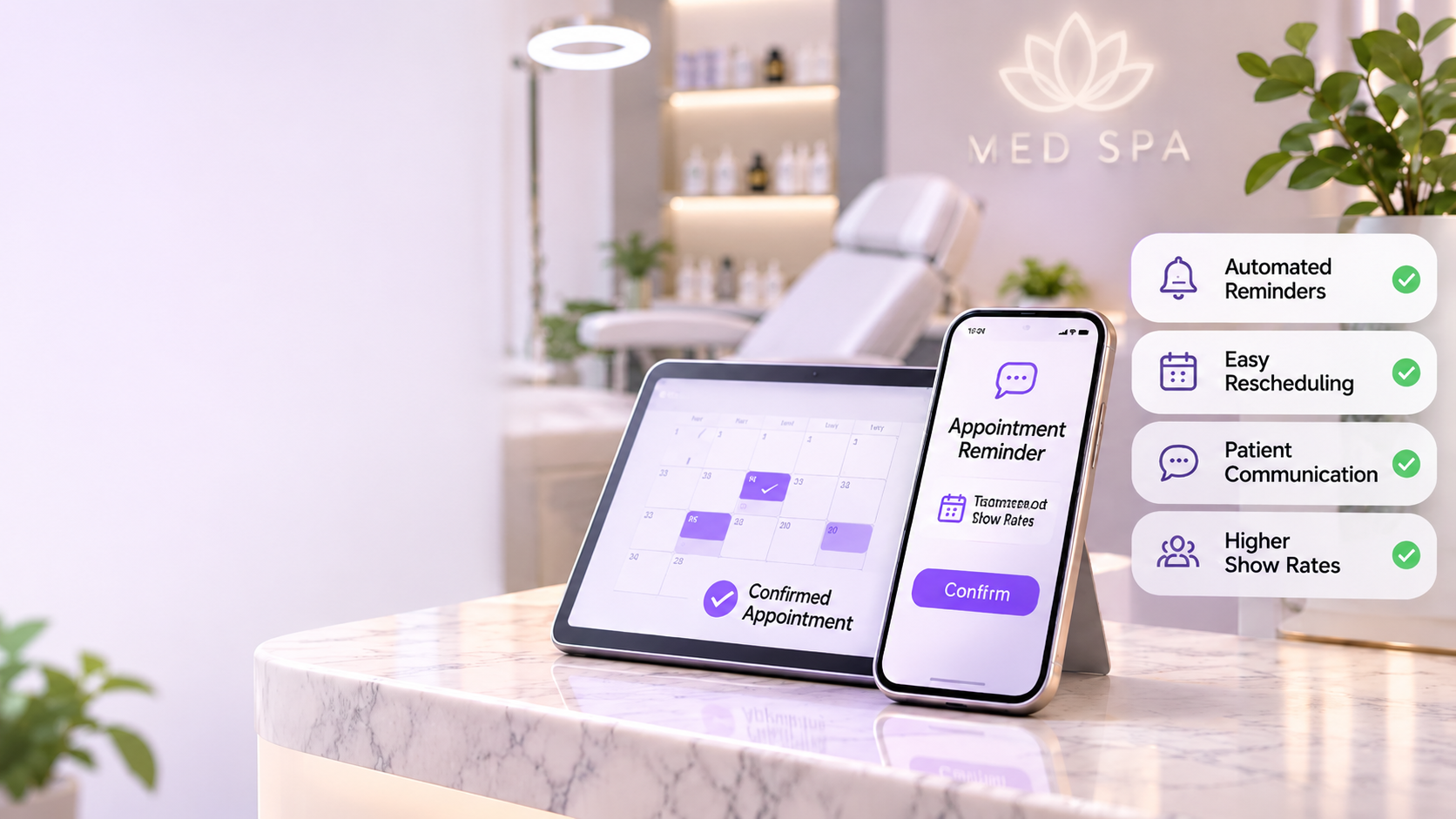
Appointment reminders are one of the most practical ways to support attendance.
Depending on patient preferences, reminders may be delivered through SMS, email, or phone calls.
A practice might use a communication schedule such as:
- Confirmation when the appointment is booked
- Reminder several days before the visit
- Final reminder approximately 24 hours before the appointment
The appropriate timing depends on the treatment and clinic policies.
Under HIPAA, appointment reminders are generally considered treatment communications that do not require a separate HIPAA authorization. Practices must still apply appropriate privacy safeguards and comply with other applicable messaging rules.
The U.S. Department of Health and Human Services provides guidance on appointment reminders and HIPAA.
2. Make Rescheduling Easy
Patients sometimes need to change appointments because of work, travel, illness, or other commitments.
When rescheduling requires several phone calls, patients may delay contacting the practice.
Providing clear rescheduling instructions can help patients communicate changes earlier.
Medical spas should make it easy to find information about:
- How to reschedule
- Cancellation deadlines
- Applicable fees
- Appointment deposits
- Contacting the front desk
A connected scheduling system can help staff update appointments without duplicating information across multiple calendars.
3. Use Appointment Deposits When Appropriate
Deposits may help establish clear expectations for appointments that require significant provider time or resources.
However, deposit policies should be transparent.
Before booking, patients should understand the amount required, refund conditions, cancellation deadlines, and how the deposit applies to their treatment.
Practices should also ensure their policies comply with applicable laws and payment-processing requirements.
Deposits should support predictable scheduling rather than create unnecessary friction.
4. Improve Communication Before the Visit
Some patients miss appointments because they are uncertain about the date, location, preparation requirements, or next steps.
Clear pre-appointment communication can address these issues.
For example, a patient scheduled for a consultation may need parking instructions, intake forms, or information about what to bring.
Providing these details in advance can make the visit easier to prepare for.
DigiMEDSPA's Unified Communications solution connects phone and SMS tools with broader practice workflows.
5. Use a Waitlist to Fill Open Appointments
When a patient cancels, an organized waitlist may help fill the available time.
Practices can identify patients who have requested earlier appointments and contact them when suitable openings become available.
The process should account for treatment type, provider availability, appointment duration, and patient preferences.
A waitlist is most useful when it is maintained consistently and connected to the scheduling workflow.
6. Let AI Assist With Scheduling Inquiries
AI-powered communication can support appointment-related interactions.
Depending on the platform and configured permissions, an AI receptionist may answer calls, check appointment availability, and assist with rescheduling or cancellations.
DigiMEDSPA's AI Phone Agent is designed to connect routine patient communication with appointment workflows.
Staff should remain available for complex scheduling situations and inquiries requiring human judgment.
7. Track No-Show and Cancellation Patterns
Practices should monitor appointment performance over time.
Useful metrics include:
- No-show rate
- Same-day cancellation rate
- Appointment confirmation rate
- Rescheduling rate
- Percentage of canceled slots refilled
For example, a simple no-show rate can be calculated as:
No-Show Rate = Missed Appointments ÷ Scheduled Appointments × 100
Use consistent definitions and exclude cancellations from the no-show count when they are tracked separately.
Reviewing these metrics can help practices identify opportunities to improve scheduling policies and communication.
How DigiMEDSPA Supports Appointment Management
DigiMEDSPA connects scheduling, patient profiles, communications, and practice-management workflows.
By bringing these tools together, medical spas can manage appointments, communicate with patients, and organize daily operations within a connected environment.
Reducing no-shows requires more than reminders alone. It involves clear policies, convenient communication, and consistent scheduling processes.
Explore DigiMEDSPA Practice Management →
One Platform. One Workflow. One Connected Practice.